Why Cleaning for Allergy Sufferers Matters for Daily Wellbeing
A home should always be a safe haven. For those with sensitive airways, however, fine particles can gather quietly in carpets and soft furnishings. Understanding how these particles behave is key to managing them. Dust mites thrive in warm, humid spaces, particularly on fabric surfaces. In addition, pollen can drift through open windows and settle onto your favourite armchairs. This constant exposure can lead to disrupted sleep, fatigue, and physical discomfort. We have found that addressing these microscopic guests can help improve sleep quality and daily wellbeing. A structured routine provides a sense of reassurance and control. It is not about achieving absolute perfection. Instead, focus on creating a comfortable space where you can breathe easily and rest peacefully. By establishing gentle habits, you can help protect your health whilst nurturing a tranquil atmosphere. Physical health and mental clarity are deeply connected. When your living space is free from irritating dust, your mind can rest more fully. A tidy, allergen-free environment can act as a natural buffer against daily stress. Taking a proactive approach to home care allows you to reclaim your space. This gentle transition from a reactive mindset to a preventative one is incredibly empowering.
Key Principles of How to Clean Your House If You Have Allergies
When planning how to clean your house if you have allergies , technique is far more important than speed. A common mistake is using traditional dry duster tools. Dry dusting merely lifts particles into the air, allowing them to settle elsewhere. This action can trigger immediate sneezing, coughing, and watery eyes. Instead, adopt the damp dusting method. Using a damp microfibre cloth ensures that fine particles stick directly to the fabric. We always recommend working from the highest surfaces down to the floor. This method allows any disturbed particles to fall naturally, ready to be vacuumed away. It also saves you valuable time by preventing the need to clean surfaces twice. Investing in a high-quality vacuum cleaner equipped with a High-Efficiency Particulate Air (HEPA) filter is essential. Standard vacuums often release micro-allergens back into your living spaces. A HEPA filter traps tiny particles, ensuring they remain safely contained. To choose the right implements, consider reading our guide on essential cleaning tools for your home. You can also explore what professional cleaners do differently to achieve a truly dust-free environment. According to advice from Allergy UK , vacuuming twice a week is highly beneficial for those with dust sensitivities. Regular vacuuming prevents the buildup of dander and pollen in carpet fibres. Ensure you empty the vacuum canister outside to avoid releasing dust back into your rooms. Wearing a simple protective mask whilst emptying the container is another excellent preventative measure.
Finding the Best Cleaning Products for Allergy Sufferers
Choosing the best cleaning products for allergy sufferers is a crucial step in your wellness journey. Many conventional household products contain strong artificial fragrances and volatile organic compounds (VOCs). These substances can irritate sensitive airways and trigger sudden asthma symptoms. Even natural-sounding scents like pine or citrus can sometimes cause a physical reaction. We recommend selecting fragrance-free, plant-based, or hypoallergenic cleaning solutions. These gentle formulations clean beautifully without releasing irritating fumes. For everyday surfaces, simple mixtures of water and mild, unscented soap work wonderfully. You can also utilise natural white vinegar for lifting light grime and limescale. Microfibre cloths are another brilliant alternative to chemical sprays. The advanced fibres lift grease and dust without needing any chemical assistance. Using a steam
Our Room-by-Room Dust Allergy Cleaning Tips
Every room in your home presents unique conditions. To manage indoor allergens effectively, we must tailor our approach to each specific zone. By breaking the home down into sections, the process becomes manageable and calm.
The Bedroom: Your Primary Sanctuary
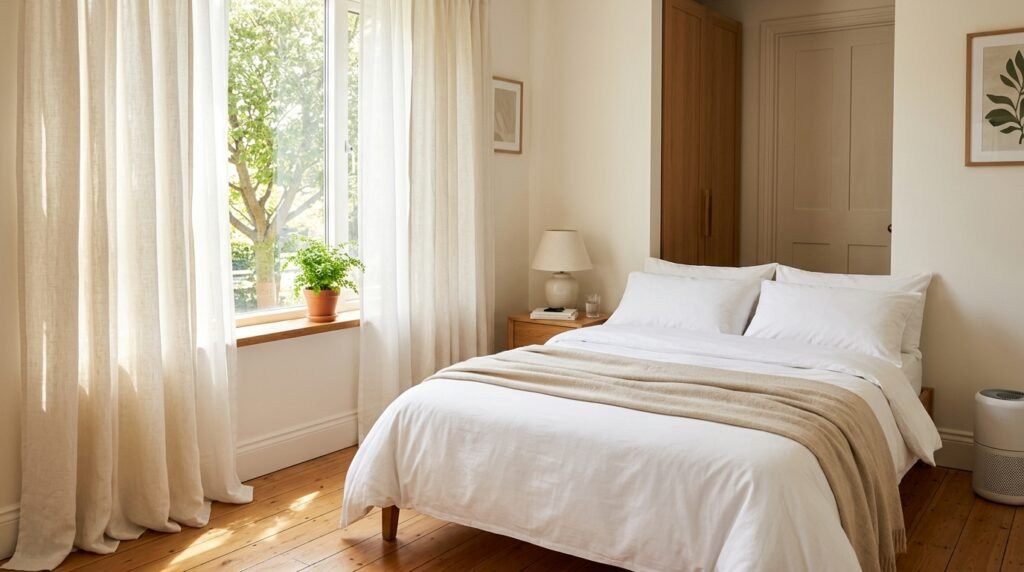
We spend a third of our lives in the bedroom. Therefore, managing dust mites in this space is incredibly important. Wash your bed sheets, pillowcases, and duvet covers weekly at 60°C. This temperature successfully neutralises dust mites and removes surface dander. Protect your mattress and pillows with zipped, breathable allergen-barrier covers. Avoid storing items under the bed, as this area can become a haven for dust. If you keep clothing in open wardrobes, consider our expert advice on bespoke wardrobe organisation to protect your garments from dust.
The Living Room: Soft Furnishings and Rugs
Living rooms often feature soft furnishings that trap allergens easily. Use our practical dust allergy cleaning tips to keep these areas comfortable. Vacuum fabric sofas, curtains, and rugs thoroughly every week. If you have leather or faux-leather seating, wipe it down regularly with a damp cloth. If you have pets, dander can cling to textured fabrics. Consider using washable throws on your seating areas. You can simply wash these throws regularly to keep dander levels low. Keep window sills clean to prevent outdoor pollen from accumulating indoors. If possible, choose blinds that are easy to wipe clean rather than heavy fabric drapes.
Kitchens and Bathrooms: Humidity and Mould
In wet areas, humidity is the primary concern. High humidity levels encourage mould growth, which produces airborne spores. Always use extractor fans during and after cooking or bathing. Leaving windows open slightly can also help excess moisture escape. Wipe down tiled walls and shower screens after use to reduce moisture build-up. We suggest addressing any damp spots promptly with a gentle vinegar solution. This natural remedy controls spores without releasing strong chemical fumes. According to research by Asthma + Lung UK , keeping indoor humidity below 50% significantly reduces mould and dust mite populations.