
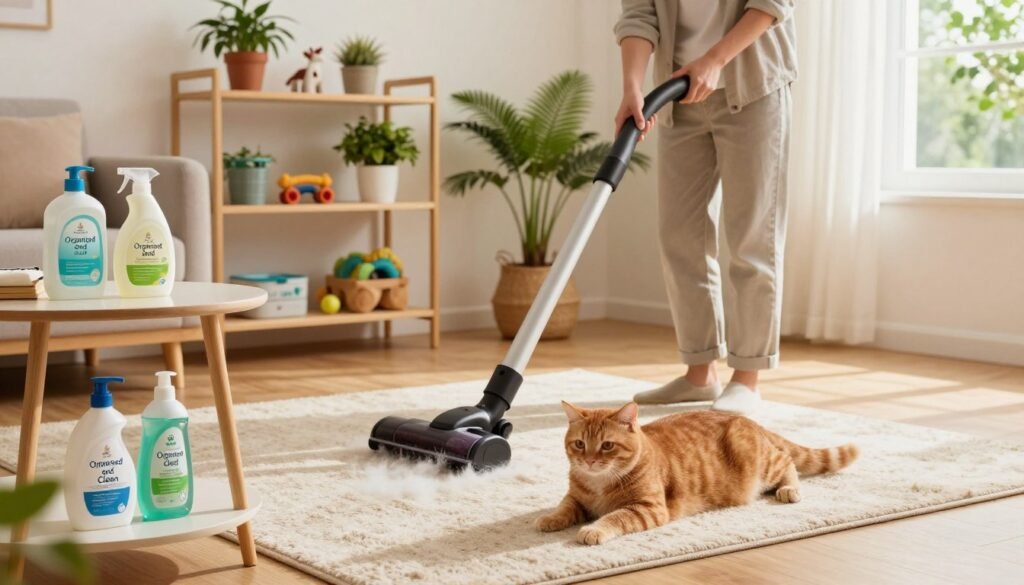
Maintaining a fresh living space while sharing your home with animals requires a thoughtful approach. Many conventional products contain harsh chemicals that may inadvertently harm your furry companions. Adopting pet-friendly housekeeping allows you to protect your household without compromising on hygiene.
Utilising natural pet-safe cleaning methods provides a superior way to maintain a healthy pet-friendly home. By focusing on consistent daily habits, you can manage stubborn hair and unpleasant odours effectively. This proactive strategy ensures that your living environment remains welcoming for both humans and animals alike.
Effective pet dander removal relies on simple actions like regular vacuuming and washing soft furnishings. By controlling what enters through your doors and keeping surfaces clear, you create a sanctuary that supports everyone’s wellbeing. Consistency is the true secret to success in this endeavour.
Key Takeaways
- Prioritise natural ingredients to avoid exposing animals to toxic substances.
- Establish a routine to manage hair and mud before they settle into carpets.
- Organise entrance areas to trap dirt and moisture at the threshold.
- Wash bedding and soft fabrics frequently to neutralise lingering odours.
- Focus on consistent maintenance rather than occasional intensive scrubbing.
Prepare Your Home and Choose Pet-Safe Natural Cleaning Materials
Creating a healthy living space begins with a thorough assessment of where your pets spend their time. Before you start any muddy paw cleaning, take a moment to walk through your home and observe the areas that collect the most debris.
Step 1: Identify dander, mud and high-traffic areas
Focus your attention on entryways, hallways, and the specific spots where your pets like to rest. These high-traffic zones often harbour loose fur, dander, and dried mud that can be tracked throughout the house.
Check your carpets, rugs, and hard flooring for visible signs of wear or dirt accumulation. Identifying these hotspots early allows you to manage your safe cleaning around pets routine more efficiently.
Step 2: Gather simple natural cleaning supplies
Once you have mapped out the problem areas, it is time to select your tools. Choosing the right pet-safe cleaning products is essential for maintaining a healthy environment for your furry companions.
Use bicarbonate of soda, white vinegar and unscented soap carefully
Many effective solutions can be found in your kitchen cupboard. Bicarbonate of soda cleaning is excellent for neutralising odours on carpets, while diluted white vinegar pet cleaning solutions work wonders on hard floors.
Always use a mild, unscented soap to ensure you are not introducing harsh chemicals into your home. A gentle approach is often the most effective way to keep surfaces clean without causing irritation.
Avoid essential oils, bleach and strongly fragranced products
It is vital to avoid bleach, ammonia, and synthetic fragrances, as these can be toxic to animals. Many essential oils are also harmful to pets, even if they smell pleasant to humans.
Stick to simple, non-toxic ingredients to ensure your home remains a sanctuary. Always prioritise pet-safe cleaning products that do not leave behind residues that your pet might ingest while grooming.
Step 3: Protect pets during cleaning
Your cleaning process should always put the wellbeing of your animals first. Taking a few extra precautions will ensure that your muddy paw cleaning efforts remain entirely safe cleaning around pets.
Ventilate rooms and keep pets away from wet floors
Always open windows to ensure good airflow while you work. Keep your pets in a separate room until the floors are completely dry to prevent them from walking through damp solutions or slipping.
Check homemade solutions on small, hidden areas first
Before applying any mixture to a large surface, test it on a small, inconspicuous area. This simple step ensures that your chosen solution will not damage your flooring or furniture fabrics.
Follow a Practical Routine for Dander and Muddy Paws
You can easily manage dander and muddy paw prints by following a simple, repeatable housekeeping schedule. A consistent approach ensures that allergens and dirt do not accumulate, keeping your home environment healthy for both you and your pets.
Step 1: Remove loose dander before wet cleaning
Vacuum carpets, upholstery and corners with suitable attachments
Always start your cleaning session by using a high-quality machine to vacuum pet dander from your floors. Use motorised brush heads to lift embedded hair from carpets and reach for crevice tools to clear dust from tight corners and upholstery.
Wash or replace filters to prevent dander from recirculating
It is vital to check your machine’s maintenance requirements regularly. Using a HEPA filter pet hair trap ensures that microscopic allergens are captured rather than blown back into the air while you work.
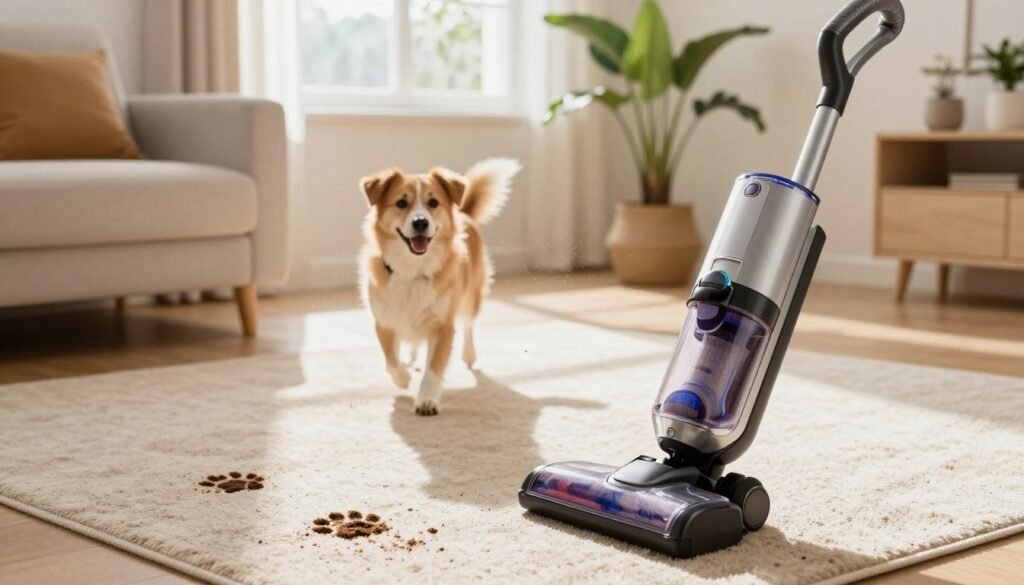
Step 2: Clean floors without spreading muddy paw marks
Allow heavy mud to dry before brushing or vacuuming
When your pet returns from a rainy walk, resist the urge to scrub wet mud immediately. Allowing the dirt to dry completely makes it much easier to brush away or vacuum without creating a muddy smear across your flooring.
Mop hard floors with warm water and a diluted, pet-safe solution
Once the loose debris is gone, perform a pet-safe floor cleaning routine using warm water and a mild, natural solution. This method effectively lifts any remaining residue without leaving behind harsh chemicals that could irritate sensitive paws.
Step 3: Manage paw dirt at the entrance
Place washable mats inside and outside doors
Strategic placement of absorbent mats acts as your first line of defence against outdoor debris. These mats trap moisture and grit before they have a chance to travel further into your living space.
Keep a damp cloth and clean towel ready for each return from outdoors
To clean muddy paws efficiently, keep a dedicated station near the door. A quick wipe with a damp cloth followed by a dry towel prevents dirt from ever reaching your carpets or furniture.
Step 4: Wash pet bedding and soft furnishings safely
Launder bedding regularly using fragrance-free detergent
You should wash pet bedding at least once a week to remove accumulated hair and dander. Always choose a fragrance-free, hypoallergenic detergent to protect your pet’s skin from potential irritation.
Freshen fabric surfaces with ventilation and light bicarbonate of soda use
For larger soft furnishings that cannot go in the wash, open windows to improve ventilation. A light dusting of bicarbonate of soda can help neutralise odours before you vacuum it away.
Step 5: Maintain a repeatable housekeeping schedule
Dust and vacuum frequently in sleeping and resting areas
Pets often spend the most time in specific zones, so focus your efforts there. Frequent cleaning in these spots prevents the build-up of hair and dander, making your weekly chores much less daunting.
Clean bowls, toys and washable accessories without leaving harmful residues
Do not forget to sanitise plastic or rubber toys regularly. Using hot water and a dash of vinegar keeps these items hygienic and safe for your pet to play with.
| Cleaning Task | Frequency | Key Benefit |
|---|---|---|
| Vacuuming Carpets | Twice Weekly | Reduces allergen load |
| Washing Bedding | Weekly | Removes trapped dander |
| Mopping Floors | Weekly | Prevents mud tracking |
| Cleaning Toys | Fortnightly | Maintains hygiene |
Conclusion
A consistent pet hygiene routine creates a balanced environment for both humans and animals. By combining dry soil removal with regular laundering, you keep your living areas comfortable. Using a fragrance-free detergent ensures that sensitive noses remain undisturbed while fabrics stay clean.
Prioritise litter box hygiene to prevent the spread of germs and ammonia build-up. Pregnant individuals should avoid this task to reduce risks associated with Toxoplasma gondii. Daily maintenance of these areas remains vital for a fresh-smelling pet home.
Check the expiry date on your enzymatic cleaner pet stains to ensure maximum potency. Bacteria-produced enzymes lose their effectiveness over time, which impacts how well they break down organic matter. Always rinse surfaces thoroughly to remove any lingering residue.
Pair these habits with suitable air filtration to capture airborne particles. Small changes in your daily habits lead to lasting improvements in your home environment. Share your own tips for keeping a tidy space with your fellow pet owners.