

Work, dinner and family needs can fill the same evening, pushing your Weekly home cleaning routine aside. A home can start to feel harder to manage when small jobs keep waiting for a spare hour.
Your household size, kids, pets, work patterns and preferred cleaning times all affect what is realistic. The aim is a home that feels manageable, not spotless every moment. A personalised plan can be easier to follow than an ambitious all-at-once clean because it makes room for the rest of life.
You can adapt the approach to your household rather than treat it as a rigid standard. A workable plan starts by identifying what your household actually needs, so begin with the rooms, mess and time you have.
Key Takeaways
- Build the schedule around your rooms and available time.
- Split larger jobs across named zones and days.
- Keep everyday upkeep short and repeatable.
- Share clear jobs, then move missed tasks to a later slot.
- Adapt the plan when household needs change.
How Should You Build a Weekly Home Cleaning Routine Around Your Household?
The most useful Weekly home cleaning routine is built around the rooms your household uses and the time you actually have. Start with your real week, including work, kids, rest and shared commitments, rather than copying someone else’s cleaning schedule.
Zone cleaning means grouping rooms or similar cleaning tasks and assigning each group to a particular day. That gives you a flexible weekly home cleaning routine template, not another strict rule for the family to keep.
Build the schedule around your rooms and available time. Zone cleaning lets you spread those jobs across the week.
Map the rooms, mess and available time
Walk through your home and note what matters in each room before assigning jobs to days. Record recurring mess, such as muddy paw prints by the door or clutter on the kitchen table. Do not time every job yet; first decide which things make the house feel cared for.
Use this five-step room audit to shape your list:
- Note each room in the house.
- Record the mess that returns there.
- List the essential cleaning tasks.
- Identify who can do each task.
- Mark realistic time slots.
A paper list, phone note or fridge board can become a reusable template. If you want more help organising the details, use this personalised home cleaning planner as a starting point.
Match jobs to people and realistic time slots
Make room for household size, pets, mobility, shared responsibilities and the time of day when you have most energy. A weekly cleaning list may take about one or two hours in a smaller or well-maintained home, depending on its size and consistent daily upkeep. That is a possible starting point, not a universal allowance. Once your needs are clear, decide which jobs belong on which days.
How Do You Spread Chores Across the Week?
Split a long weekend clean into short, named zones across weekdays to spread the effort. One zone a day might mean one room, a group of rooms or a category of tasks, depending on your schedule.
The timings below are one adaptable example, not a promise for every home. Adjust the cleaning tasks to your own rooms, pace and week; a bathroom may need more time in a busy household.
Choose a rhythm that fits your week
Choose a day for each zone when you are most likely to have time. If Monday evenings are full, move that job to Saturday or choose a lighter day. A routine should support your life, not make every evening feel booked.
Adapt this five-day zone plan
Use the example as a starting schedule, then swap rooms or tasks to suit your home.
| Day | Zone | Example tasks | Example time |
|---|---|---|---|
| Monday | Main floor | Dust dining and living-room surfaces; mop those floors | 20-30 minutes |
| Tuesday | Downstairs | Dust and mop the office, entryway and downstairs living area | 30 minutes |
| Wednesday | Bathrooms | Clean toilets, baths or showers, sinks and mirrors | 20 minutes per bathroom |
| Thursday | Kitchen | Wipe cabinet doors, sink and hob; clean out the fridge | 20 minutes |
| Friday | Bedrooms | Change sheets; dust and mop bedrooms and nearby hallways | 20-30 minutes |
Jobs can move to weeknights, weekends or a lighter day. Keep an optional weekend slot for overflow, or leave it free for rest. Your schedule works best when quick daily upkeep is separate from less frequent jobs.
What Belongs in a Daily, Weekly and Monthly Schedule?
Daily cleaning is quick maintenance, weekly cleaning covers rooms and recurring jobs, and monthly care can include appliances. Keep the daily part small so it does not turn into another full clean.
These frequencies are adjustable starting points, not rules for every household. The daily cleaning schedule may need more attention in a busy kitchen, while a spare room may need less.
Keep daily upkeep short and repeatable
A few repeatable jobs help keep grime and clutter from building up between cleaning days. Choose the ones that make your home easier to use.
Reserve weekly and monthly slots for recurring jobs
This simple daily, weekly and monthly cleaning schedule separates maintenance from less frequent care.
| Frequency | Example tasks | Purpose |
|---|---|---|
| Daily | Make beds, handle dishes or the dishwasher, wipe kitchen counters and sinks, tidy clutter, sweep or vacuum high-traffic areas as needed | Keep everyday mess from collecting |
| Weekly | Change bedding, dust surfaces, clean mirrors and bathroom surfaces, vacuum the home and mop hard floors | Refresh rooms and commonly used areas |
| Monthly | Clean the washing machine and tackle selected appliance or neglected-area jobs | Give less frequent jobs a regular place |
For ten things to clean weekly, consider mirrors, handles, the shower or bath, the toilet, kitchen hob, appliance fronts, bed linen, skirting boards, rugs and high-touch surfaces. These examples avoid turning every weekly clean into a deep clean. Choose the ones that match how your household uses each room.
Cleaning a washing machine about once a month is a useful default, though its manual takes priority. Once task frequency is clear, gather suitable products and use safe, efficient methods.
How Can You Make Cleaning Faster and Safer?
Carrying products back and forth wastes minutes, while the wrong cleaner can mark a surface. Keep useful supplies together and check what each surface needs before you start.
Never mix bleach with vinegar, other acids or ammonia. Check product labels and surface or appliance instructions, and ventilate rooms where the label requires it.
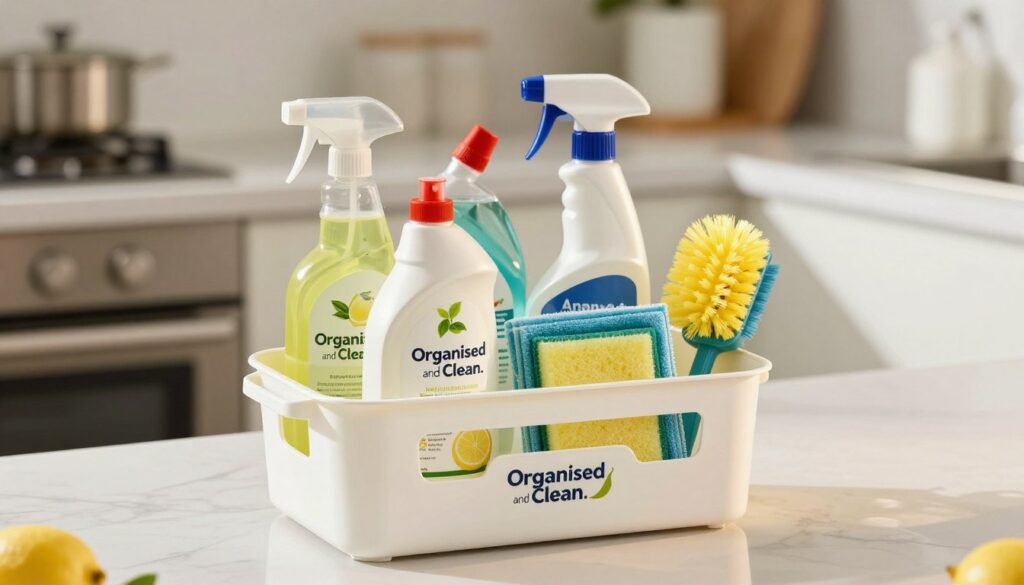
Set up a small, useful cleaning caddy
A compact caddy keeps everyday cleaning tips within reach without filling it with products you rarely use. Start with these five useful items:
- Microfibre cloths.
- A small brush or sponge.
- A multipurpose cleaner suitable for the surface.
- Rubber gloves.
- The relevant floor tool, such as a vacuum or mop.
Use shortcuts without skipping safe handling
Follow the appliance manual as well as product labels. A dishwasher load generally needs food scraps scraped off, not a full pre-rinse. The dishwasher manual takes priority if it gives different instructions.
For a coffee maker, wash removable parts with warm soapy water and wipe the machine exterior. Avoid soaking parts that the instructions say must stay dry. This routine takes less time when you clean the removable pieces after use.
For a microwave, check its instructions first. If they allow it, heat a microwave-safe bowl of water and vinegar until the inside steams. Let it cool before wiping the surfaces, and handle the bowl carefully.
These small steps save time without rushing through safety checks. Give deep clean jobs their own less-frequent slot instead of squeezing them into every routine clean.
Which Jobs Belong in a Deeper Clean?
Dust behind furniture can build up without needing attention during every weekly clean. Rotate less-used areas so a deep clean feels like a planned job, not a second full-time schedule.
Put occasional jobs on a rotation, then act sooner when a spill or heavy grime cannot reasonably wait. For example, a fridge spill needs attention when it happens, even if the inside of the fridge is not due for its next planned clean.
Rotate appliance and hidden-area jobs
Spread vents, blinds and curtains, light fittings, and areas under and behind furniture across different months. The inside of the fridge and freezer, oven, dishwasher and kettle can also take turns on your list. This stops one day from becoming an exhausting kitchen clear-out.
Use your own judgement for urgent mess. A badly soiled oven may need attention before its planned slot, just as a leaking food container should not sit in the fridge until next month. The rotation is a reminder, not a reason to leave a problem untouched.
Schedule textiles and seasonal cleaning
Textiles and glass may need occasional care, depending on use, material and season. Add pillows, shower-curtain liners, carpets and windows to a separate list, then check care labels and equipment instructions before washing or cleaning them.
Down and fibrefill pillows can be machine-washed two at a time on a gentle warm cycle, if their care labels allow it. Washing pillows every three to six months is one suggested interval, not a rule for every filling or household. Dry them as the label directs before putting them back on the bed.
Choose a few of these jobs for each rotation rather than adding all of them to your weekly cleaning. Rotating tasks keeps the plan realistic and makes it easier to share and adjust as household needs change.
How Can Your Household Keep the Plan Workable?
If a missed cleaning day makes the whole schedule feel impossible, the plan needs room to bend. One missed task is not a failed week; move it to a named later slot and carry on.
Give each person a clear, age-appropriate responsibility and make it visible. A shared list on the fridge can show who handles dishes, clutter or another household job, so family members do not have to guess.
Move a missed job to a named later slot instead of doubling the next day’s workload.
Share clear, age-appropriate responsibilities
Choose tasks that fit each person’s age, ability and routine. Kids might put away toys or shoes, while an adult handles a job that needs a product label checked. Reducing clutter makes surfaces quicker to clean, but a spotless home is not the goal.
An optional 10-minute evening reset can help with small jobs: put away shoes and toys, empty the dishwasher or take out rubbish. Use the time to clear a path for the morning, not to start an unplanned deep clean.
Reset after missed days instead of abandoning the plan
Write down where a missed task will go, such as Saturday morning or the next light day. Do not double the next day’s workload to compensate. If the same job keeps slipping, make its slot shorter, move it or share it.
A cleaner may be asked to prioritise bathrooms, kitchen surfaces and floors, or another agreed set of jobs. What one cleaner can achieve in two hours depends on the home’s size, condition and agreed scope. Be clear about priorities before the visit so the most important work has a place.
If the plan no longer fits work, family commitments or changing needs, adjust the list rather than giving it up. Choose one small change and start with the next scheduled task.
Conclusion
Consistency matters more than completing every possible chore in one day. Keep recurring jobs visible, then adjust their timing when your available hours or household needs change.
You do not need to fill every spare evening with cleaning. A few clear priorities can make the house feel easier to manage without expecting every room to look untouched.
Write down three priority rooms and assign each its first cleaning slot. Choose the first task and put it into your household calendar.