
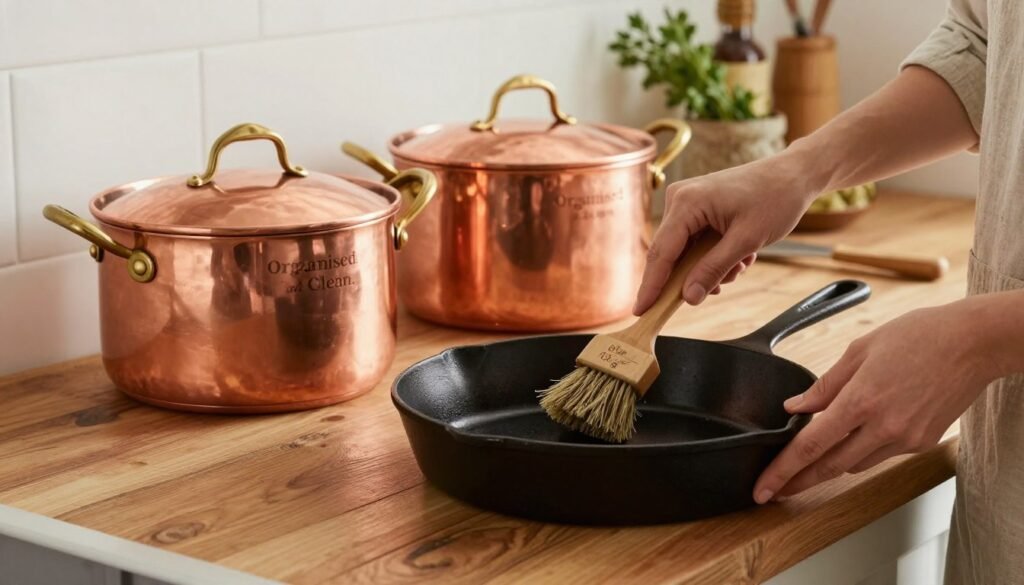
Investing in premium cookware transforms your kitchen experience, yet these materials demand specific attention. Whether you favour the heat retention of cast iron or the rapid thermal response of metallic vessels, proper cookware maintenance ensures your tools last for generations.
Understanding the unique properties of your equipment is the first step toward mastery. While cast iron builds a protective seasoning over time, other metals require a different approach to keep their lustre and performance at a peak level.

This guide explores essential techniques for cast iron care and the upkeep of high-quality copper cookware. We will demonstrate how to remove rust, preserve seasoning, and clean copper pans naturally to maintain their beauty. By following these traditional methods, you protect your investment and improve your daily culinary results.
Key Takeaways
- Regular cast iron care prevents rust and builds a superior non-stick surface.
- Copper cookware excels at heat control but requires gentle handling to avoid damage.
- Consistent cookware maintenance extends the lifespan of your kitchen essentials significantly.
- You can clean copper pans naturally using simple household ingredients like vinegar and salt.
- Proper storage techniques prevent scratches and oxidation on your most valuable pieces.
Choosing the Right Care for Cast Iron and Copper
Every piece of high-quality cookware requires a tailored approach to ensure it lasts for generations. Before you start any maintenance, you must understand the unique material properties of your pans. Taking a moment to assess your equipment prevents accidental damage and keeps your kitchen tools performing at their best.
Identify the Cookware’s Finish and Condition
Start by determining if your item is bare cast iron, seasoned, or enamelled. For copper pieces, check if they are tin-lined, stainless-steel-lined, or lacquered. Each finish reacts differently to heat and cleaning agents, so knowing your material is essential.
Carefully inspect the surface for the following signs of wear:
- Deep scratches or gouges in the metal.
- Worn or peeling linings that expose the base metal.
- Loose handles or rivets that may trap moisture.
- Patches of rust or flaking seasoning on cast iron.
- Heavy tarnish or discolouration on copper surfaces.
Gather Gentle Household Supplies
Once you have assessed the condition, you can prepare your workspace. Effective copper pan cleaning does not require harsh chemicals; instead, rely on natural cleaning supplies that are safe for both your health and your cookware. Avoid sudden temperature changes, such as plunging a hot pan into cold water, as this can cause warping or cracking.
Keep these essential items on hand for routine maintenance:
- Warm water and a mild, pH-neutral washing-up liquid.
- A soft cloth or a non-abrasive sponge to protect delicate surfaces.
- Wooden or silicone tools to scrape away stubborn food without scratching.
- Baking soda for a gentle, effective scrub.
Using a non-abrasive sponge ensures that you remove residue without stripping away the protective patina. By choosing natural cleaning supplies, you maintain the integrity of your pans while simplifying your copper pan cleaning routine. Consistency is the key to preserving the beauty and functionality of your premium kitchen collection.
Clean copper pans naturally Without Damaging the Finish
Achieving a professional finish on your copper pans does not require harsh chemicals or expensive store-bought cleaners. You can clean copper pans naturally by utilising simple ingredients found in your kitchen cupboard. This approach preserves the integrity of the metal while ensuring your cookware remains both beautiful and functional.

Step 1: Remove Grease and Food Residue
Before addressing any discolouration, you must clear away surface debris. Start by washing your pan in warm water mixed with a small amount of mild washing-up liquid.
Use a soft sponge or a microfibre cloth to gently wipe the surface. Avoid using steel wool or abrasive scouring pads, as these will leave permanent scratches on the soft copper surface.
Step 2: Lift Tarnish with Lemon and Salt
For effective copper tarnish removal, the combination of acid and abrasive is highly efficient. Cut a fresh lemon in half and sprinkle a generous amount of table salt onto the cut side.
Rub the salted lemon directly onto the exterior of the pan in circular motions. This lemon and salt cleaning method reacts with the oxidation to lift away dull spots and restore a bright, warm glow.
Step 3: Use White Vinegar Carefully for Heavy Tarnish
If your cookware has stubborn, dark patches, you may need a slightly stronger solution. White vinegar for copper works wonders when applied with care.
Mix equal parts white vinegar and water in a bowl. Dip a soft cloth into the mixture and gently rub the affected areas, ensuring you do not soak the pan for too long.
Step 4: Rinse, Dry and Polish Copper Properly
Once the tarnish has lifted, rinse the pan thoroughly under warm running water to remove all acidic residue. It is vital to dry the item immediately with a clean, lint-free towel to prevent water spots.
For the final touch, perform copper pan polishing by buffing the surface with a dry, soft cloth. This simple step brings out a deep, mirror-like shine that highlights the quality of your cookware.
Safety Checks for Lined and Lacquered Copper
Always inspect your pans before you begin the cleaning process. If your copper is lined with tin, never use harsh acidic cleaners on the interior, as this can strip the protective layer.
Similarly, check if your pan has a protective lacquer coating. If the lacquer is peeling or damaged, you should remove it entirely before attempting to polish the copper, as cleaning over a damaged finish will result in an uneven, patchy appearance.
Restore and Maintain Well-Seasoned Cast Iron
Maintaining your cast iron cookware is a rewarding ritual that ensures your pans last for generations. When treated with respect, these heavy-duty tools become more non-stick and efficient the more you use them. Consistency is the secret to keeping your kitchen staples in peak condition.
Step 1: Clean Cast Iron While It Is Still Warm
The best time to clean a cast iron skillet is shortly after cooking, while the metal is still warm to the touch. This residual heat helps loosen stubborn food particles, making them much easier to remove without harsh scrubbing. Use hot water and a soft brush or cloth to gently wipe away debris.
Avoid using metal scrapers that might damage the surface. Instead, opt for wooden or silicone tools to lift any stuck-on bits. This simple habit preserves the integrity of your pan’s surface.
Step 2: Treat Rust and Baked-On Residue
If you notice stubborn spots, do not panic. You can effectively remove rust from cast iron by using a mild abrasive, such as a paste made from coarse salt and a little water. Gently scrub the affected area until the rust lifts, then rinse and dry immediately.
For baked-on food that refuses to budge, a brief soak in hot water is acceptable, provided you dry the pan thoroughly afterward. Never leave your cookware submerged for long periods, as this invites moisture damage.
Step 3: Dry and Re-season the Cooking Surface
After washing, place your skillet on the hob over low heat to ensure every trace of moisture evaporates. Once dry, apply a very thin layer of neutral oil to the interior surface. This process, known as cast iron seasoning, creates a protective, non-stick layer that prevents oxidation.
Buff away any excess oil with a paper towel until the surface looks matte rather than greasy. Regular cast iron seasoning keeps your pan ready for the next culinary adventure.
Step 4: Care for Enamelled Cast Iron Differently
It is important to note that enamelled cast iron care differs significantly from traditional raw iron. The enamel coating acts as a protective barrier, meaning you should never use abrasive cleaners or steel wool on these pieces. Always use gentle sponges and mild dish soap to maintain the glossy finish.
Unlike raw iron, enamelled pieces do not require oiling or seasoning. Simply wash, dry, and store them carefully to avoid chipping the delicate coating. By following these specific steps, you ensure your collection remains both beautiful and functional.
Build Simple Cleaning and Storage Habits
Establishing a simple care routine is the secret to keeping your kitchen tools in peak condition. By integrating these small steps into your daily life, you ensure that your pans remain functional and beautiful for generations.
After Every Use
Always clean your pans as soon as they have cooled down to a safe temperature. Avoid the temptation to leave them soaking in the sink, as prolonged moisture is the enemy of both copper and iron.
Use a soft sponge and mild soap to remove food residue. Immediate drying with a clean tea towel is essential to prevent water spots or surface oxidation.
Weekly and Seasonal Care
Take a moment each week to inspect your collection for any signs of wear. If you notice your bare cast iron looking grey or dry, it is time to apply a thin layer of oil to prevent rust on cast iron surfaces.
Seasonal maintenance involves a deeper check of your copper pieces. If the shine has faded, a gentle polish will restore the lustre and keep the metal protected against the elements.
Storage That Prevents Moisture and Scratches
Effective cookware storage relies on keeping items in a dry, well-ventilated cupboard. If you must stack your pans, place soft felt separators or paper towels between them to avoid unsightly scratches.
When storing pots with lids, keep them slightly ajar to allow air circulation. This simple trick prevents trapped moisture from causing damage to the interior surfaces.
Common Mistakes to Avoid
Many cooks accidentally damage their equipment by ignoring basic safety rules. One major error is subjecting your thermal shock cookware to rapid temperature changes, such as placing a hot pan directly into cold water.
Avoid using harsh steel wool, which can strip away seasoning or scratch delicate finishes. Below is a quick guide to help you navigate these common pitfalls.
| Action | Recommended | Avoid |
|---|---|---|
| Cleaning | Hand wash only | Dishwasher |
| Temperature | Gradual cooling | Thermal shock cookware |
| Maintenance | Regular oiling | Prolonged soaking |
| Storage | Dry, ventilated area | Damp, closed spaces |
Conclusion
Mastering the art of kitchen maintenance transforms how you cook every day. Matching your cleaning method to the specific needs of copper or cast iron protects the integrity of your pans. Copper requires gentle polishing to maintain its lustre, while bare cast iron relies on prompt drying and consistent seasoning to prevent rust.
A dedicated cookware care routine ensures that your favourite pieces remain in peak condition. When you respect the unique requirements of each material, you guarantee reliable heat distribution and superior food release. These small habits prevent damage and keep your surfaces performing like new.
Investing time in these simple practices leads to long-lasting cookware that serves your home for generations. You will find that well-maintained pans make every recipe easier to execute. Start your new habits today to enjoy the full potential of your premium kitchen collection.